


Two Essential Reads.
One Powerful Mind.
Leadership, intelligence and better decisions in an uncertain world.
Consultant. Author. Speaker.
Across boardrooms, government institutions and international environments, Martin’s work has centred on one enduring challenge:
How do we make sound decisions when information is incomplete, interests are complex and the consequences matter?
Whether advising an organization, writing about leadership or speaking to an audience, Martin brings the same disciplined perspective: understand the mission, examine the environment and look beyond the obvious before deciding what happens next.
Clarity Before Action.
Martin advises leaders operating at the intersection of business, government, technology, security and public policy.
His work often begins where the situation becomes difficult to define. The organization may understand what it wants to accomplish but remain uncertain about the forces preventing movement, the people influencing the decision or the message most likely to resonate.
Martin helps leaders see the full landscape. He brings together intelligence gathering, institutional knowledge, strategic analysis and a practical understanding of how consequential decisions are actually made.
The objective is not to generate more activity or arrange meetings without a clear purpose. It is to define the mission, identify where genuine opportunity exists and build a credible path toward meaningful progress.
Because before an organization can move effectively, it must understand the environment in which it is moving.
Ideas Tested in the Real World.
Martin’s writing draws upon decades of experience across financial markets, international assignments, government, national security and emerging technology.
These are environments where plans are tested, assumptions are challenged and decisions must often be made before every fact is available. They have given Martin a close view of what happens when leaders understand the moment—and what happens when they do not.
His books examine the disciplines behind sound judgement: adaptability, empathy, intelligence gathering, critical inquiry and the ability to remain focused on the mission while circumstances change.
The ideas are practical because they come from experience. They are written not to provide simple formulas, but to help readers become more deliberate observers, more rigorous thinkers and more capable decision-makers.
Martin’s central belief is straightforward:
Better outcomes begin with a better understanding of the situation.
Two Essential Reads. One Powerful Mind at Work.
Martin’s two books approach consequential decision-making from different but closely connected perspectives.
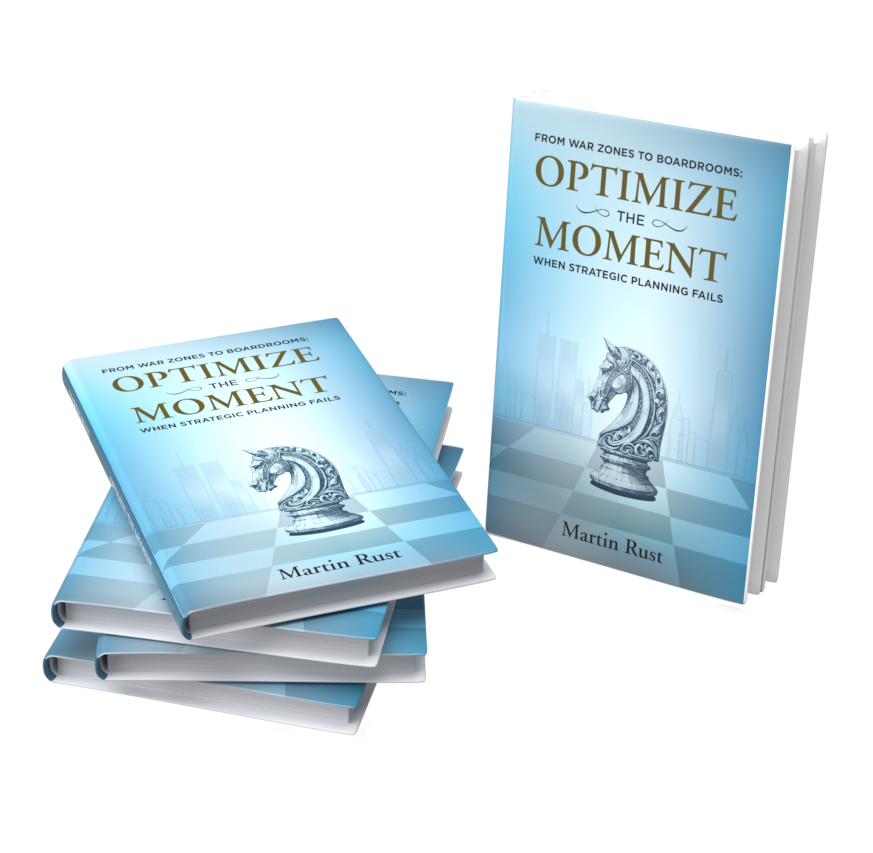
Optimize the Moment
From War Zones to Boardrooms: Optimize the Moment When Strategic Planning Fails examines what leaders must do when circumstances change and the original plan no longer fits the environment.
It explores the judgement, adaptability and empathy required to respond without losing sight of the mission. The book is not an argument against strategic planning. It is an examination of what happens when reality introduces conditions the plan could not anticipate.
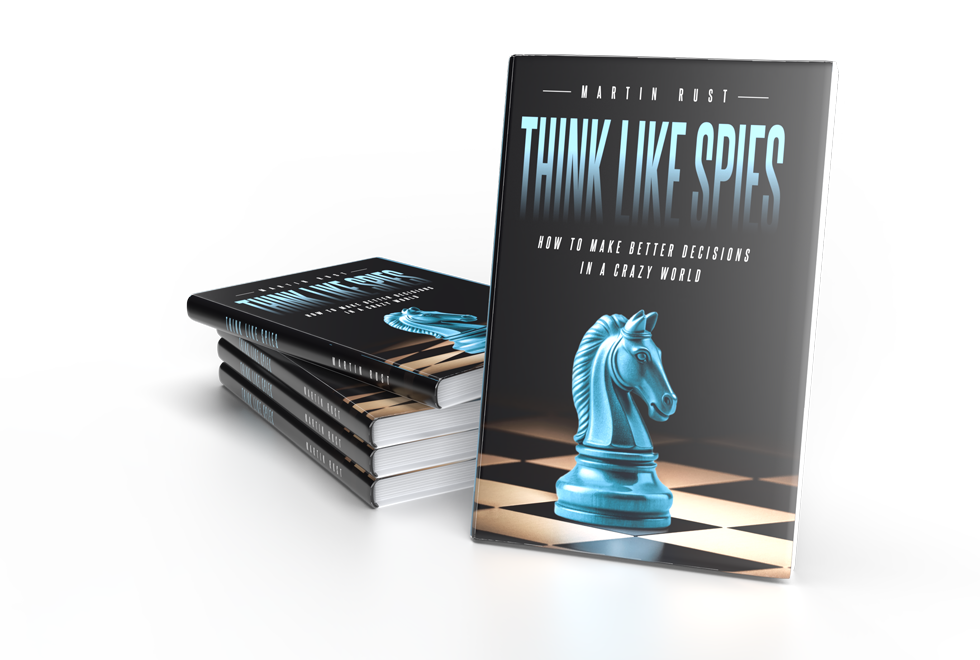
Think Like Spies
Think Like Spies: How to Make Better Decisions in a Crazy World turns to the intelligence required to understand those changing conditions.
It challenges readers to look beyond the information placed directly in front of them, question assumptions and identify the few meaningful signals hidden within overwhelming amounts of noise. Intelligence, in this context, is not secrecy. It is the disciplined ability to observe, test, interpret and act.
One book examines how to respond when the moment changes.
The other examines how to see that moment more clearly.
Together, they offer a practical philosophy for leading through complexity:
Understand the mission. Read the environment. Act with purpose.
A Good Conversation Should Change What Happens Next.
Martin speaks about leadership, intelligence, strategy and decision-making in environments where uncertainty is unavoidable.
Drawing upon experiences from financial markets, international assignments, government advisory work and national security, he brings complex subjects into a conversation that is direct, engaging and relevant to the people in the room.
His presentations do more than describe what effective leadership looks like. They challenge audiences to examine how they gather information, what assumptions they may be treating as facts and whether their actions are genuinely advancing the mission.
The stories provide context. The frameworks provide structure. The questions encourage people to look again at the situation in front of them.
A successful presentation should not simply hold an audience’s attention for an hour. It should give them a sharper way of thinking long after the room has emptied.
The goal is not to tell people what to think.
It is to help them think more deliberately.